




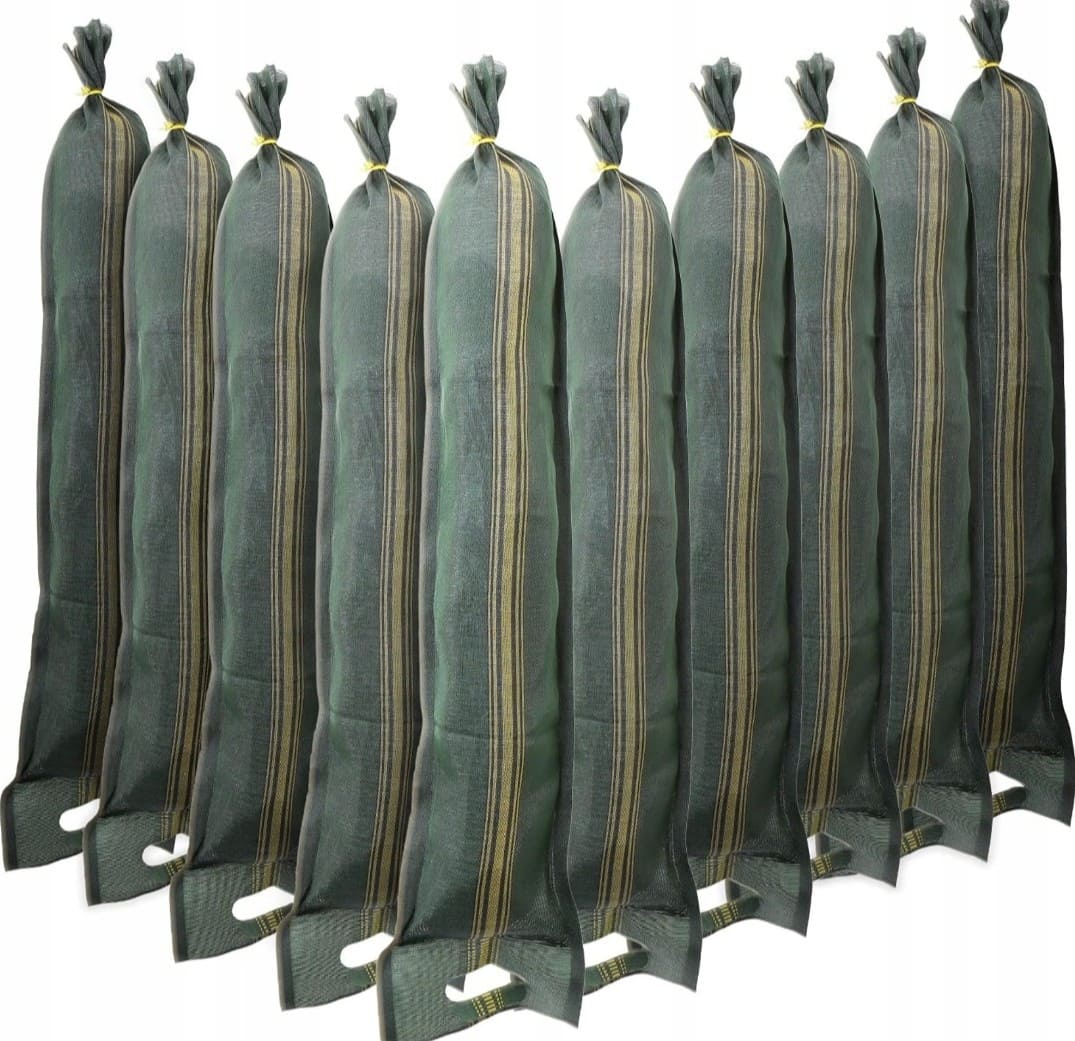
Quick Facts — Sandbags for Flood Protection, 11-pack
- Type: Sandbags / weight bags for flood protection
- Quantity: 11 pcs
- Dimensions: 25 x 100 cm per bag
- Capacity: 12–15 kg sand or soil per bag
- Closure: Drawstring
- Handle: Integrated carry handle
- Colour: White
- Material: Hard-wearing woven fabric
Eleven sandbags for building water barriers during flooding. Each bag measures 25 x 100 cm and holds 12–15 kg of sand or soil, giving a filled bag enough weight to sit firmly against the ground without being shifted by flowing water.
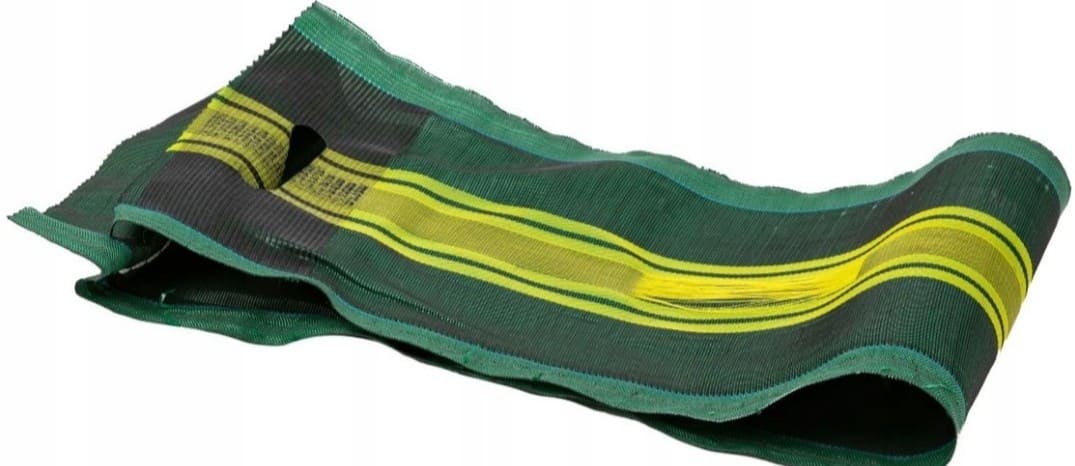
The bags have a drawstring for quick closure and an integrated carry handle that keeps them manageable even when filled. Empty, they take up minimal space and can be stored on standby until needed – an advantage over pre-filled barrier products that require storage space year-round.
What sets these sandbags apart?
The elongated 25 x 100 cm shape means the bags can be laid overlapping into a tight barrier without gaps between units, unlike shorter, rounder bags that leave openings where water gets through. The drawstring closes the bag without needing to be tied or taped, and the carry handle means a filled 15 kg bag can be lifted with one grip – significant when many bags need placing under time pressure.
Applications for the sandbags
The bags are used as a barrier during flooding, to protect buildings, basement entrances and gardens from water ingress, as temporary reinforcement of dams and riverbanks, and to divert water away from sensitive areas. They also work as weights to hold down tarpaulins, tents and building materials in windy conditions.
How to build a sandbag barrier
Fill the bags to roughly two-thirds – an overfilled bag becomes rigid and seals less effectively against the ground and against neighbouring bags. Lay the row with the closure facing inward towards the protected area and tamp each bag so it moulds to the ground. For higher barriers, lay the bags in a bond pattern, with the joints staggered between layers, in the same way as bricks.
Technical Specifications
| Type | Sandbag / weight bag for flood protection |
| Quantity per pack | 11 pcs |
| Dimensions per bag | 25 x 100 cm |
| Capacity | 12–15 kg sand or soil |
| Material | Hard-wearing woven fabric |
| Colour | White |
| Closure | Drawstring |
| Handle | Integrated carry handle |
| Filling | Not included – filled with sand or soil |
Suitable for: Homeowners in flood-prone areas, property caretakers, farmers, construction companies, and emergency preparedness officers in municipalities and associations.
Industries: Property management, construction and civil works, agriculture, municipal preparedness, and emergency services.
Frequently Asked Questions (FAQ)
How many sandbags are needed to protect a door or garage entrance?
As a guideline, around four to five bags per metre are needed for a single layer, since each bag is 100 cm long but overlaps its neighbour. A standard 90 cm door is therefore covered by roughly five bags in one layer. A 2.5-metre garage entrance in two layers needs closer to 25 bags. Eleven bags cover a single layer across about two metres, or a double layer across a doorway.
Is sand included with the sandbags?
No, the bags are supplied empty and filled with sand or soil on site. This is deliberate – empty bags weigh almost nothing, take minimal storage space and can be kept on standby for long periods, while the filling is sourced locally when the need arises. Eleven empty bags fit on an ordinary shelf.
What sets sandbags apart from self-inflating water barriers?
Sandbags require filling on site and therefore take longer to deploy, but they mould to uneven ground, can be stacked to any height and work on any surface. Self-expanding barriers are quicker to lay out but need water already present to activate, cost more per metre and cannot be reused as many times. Sandbags can also be emptied and kept for the following season.