



Available Options
Key Facts — BestFan Belt-Driven Industrial Wall Fan
- Brand: BestFan
- Type: Wall-mounted industrial fan, reversible intake/extract
- Airflow: 21,000–44,500 m³/h
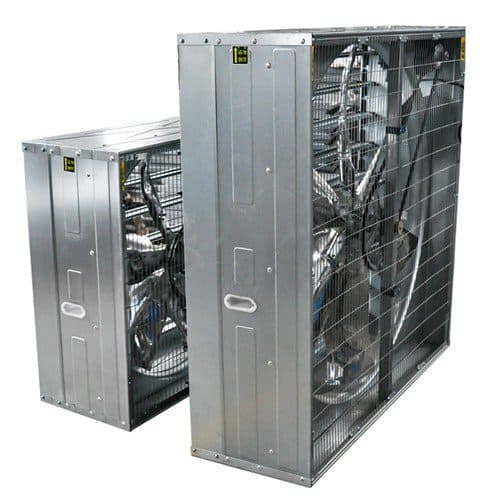
- Sizes: 4 models, 80x80 to 138x138 cm
- Drive: Belt-driven
- Voltage: 400V, 3-phase
- Material: Galvanised steel
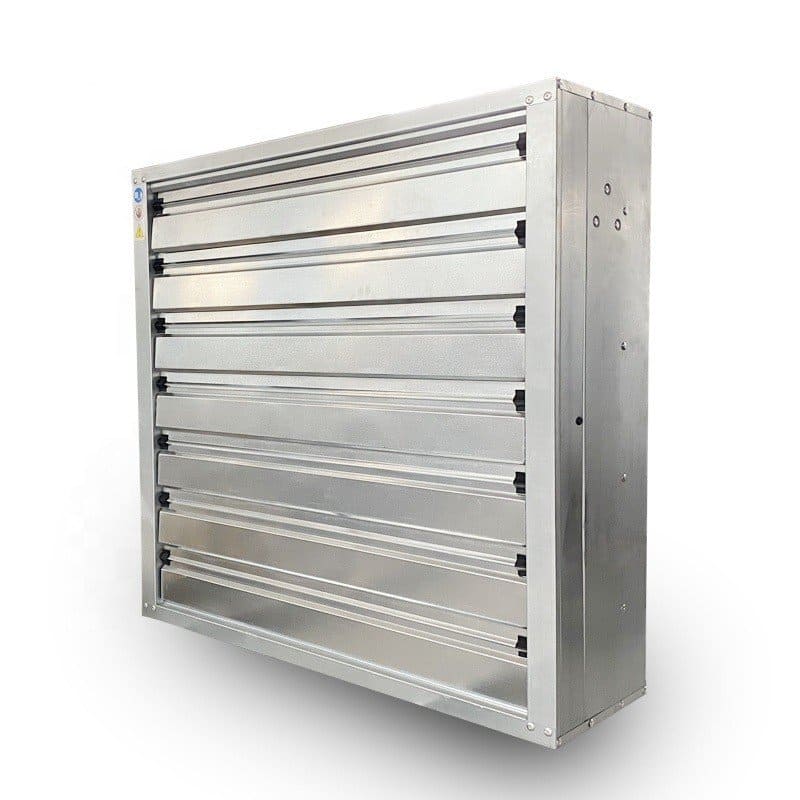
The BestFan wall fan moves between 21,000 and 44,500 m³/h depending on model, enough for production halls, livestock buildings and warehouses where the air has to be changed continuously. Four sizes are available, from 80x80 cm to 138x138 cm — select the size when ordering, based on the volume of the building.
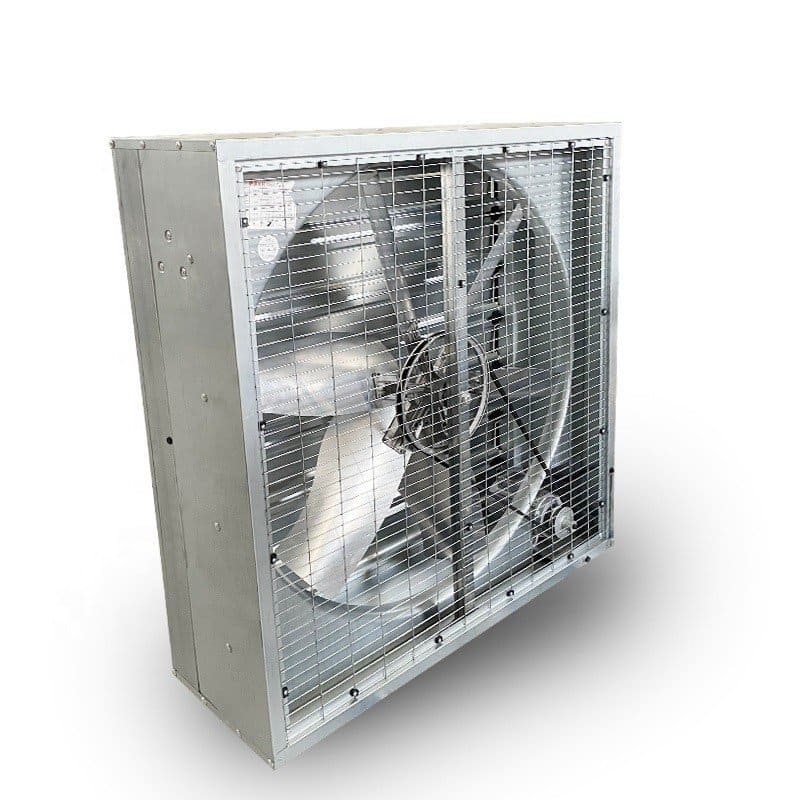
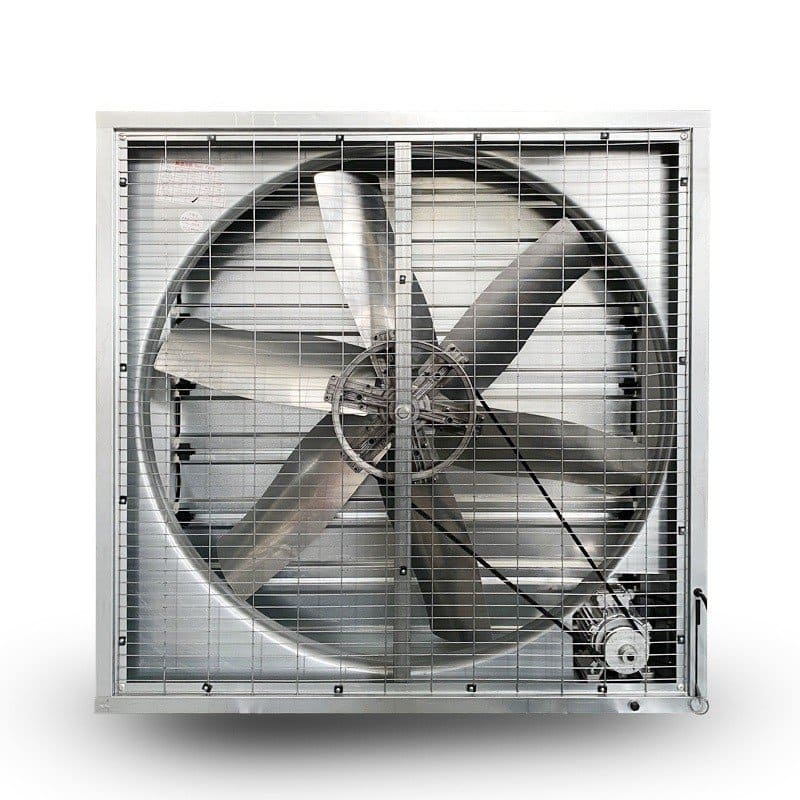
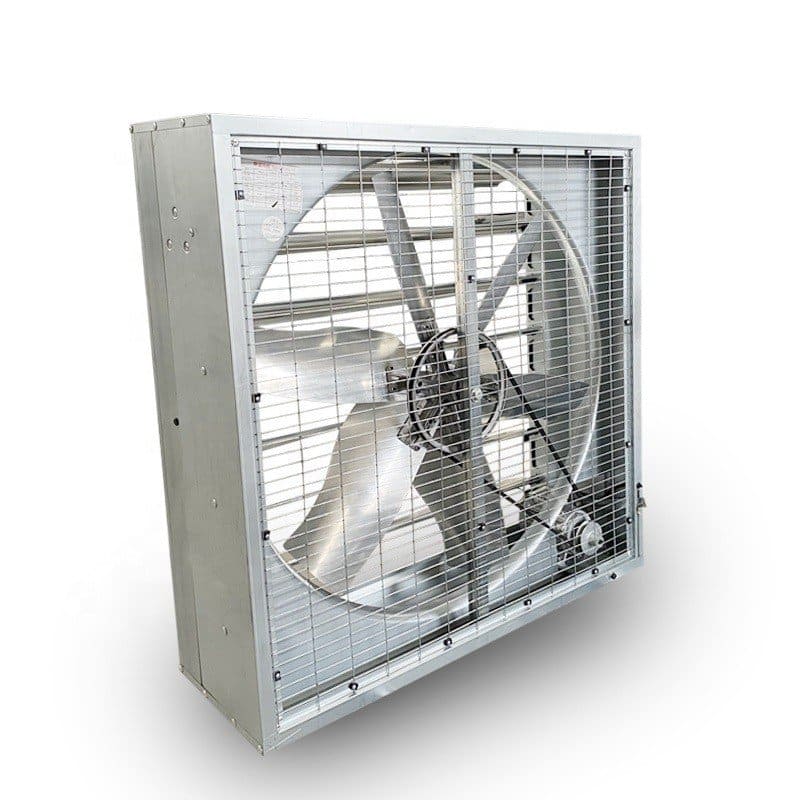
Drive is by belt rather than straight off the motor shaft. The belt absorbs vibration before it reaches the building structure, and under sudden resistance it slips instead of loading the motor. Speed is adjusted by changing the pulley, so the same fan can be trimmed to the air change rate the space actually needs.
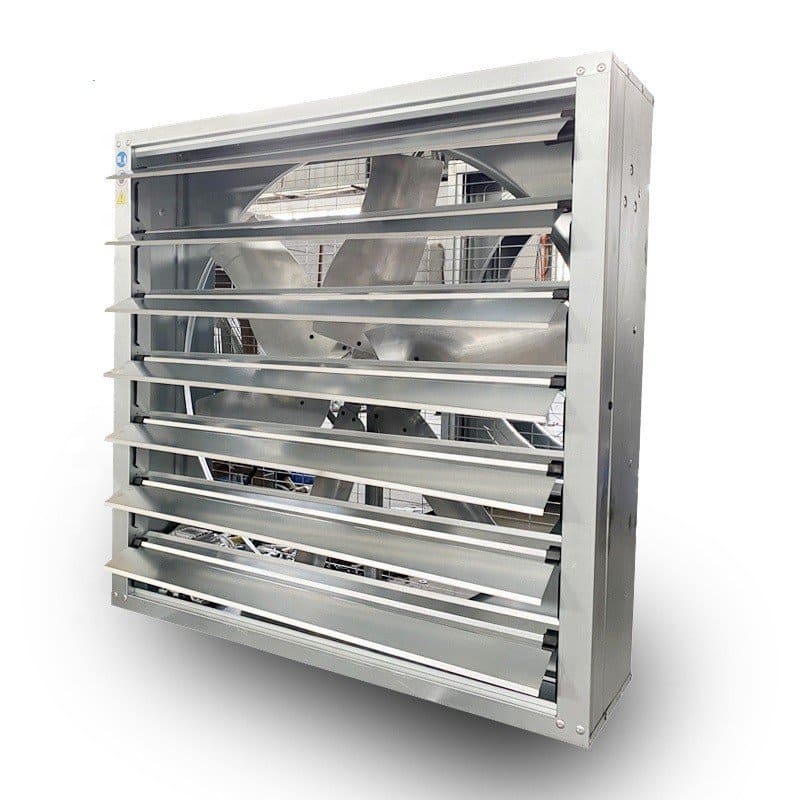
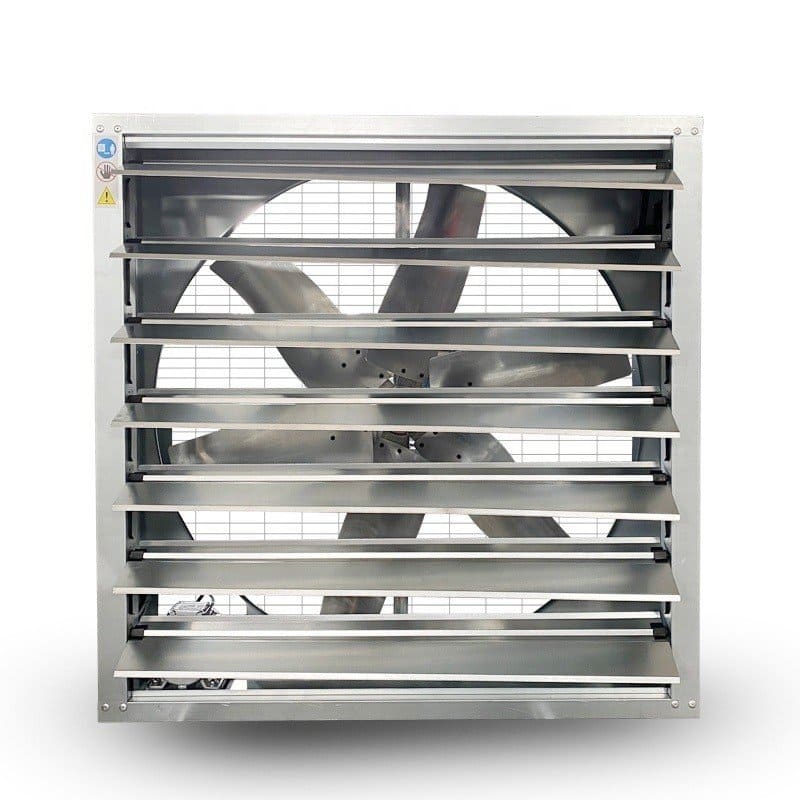
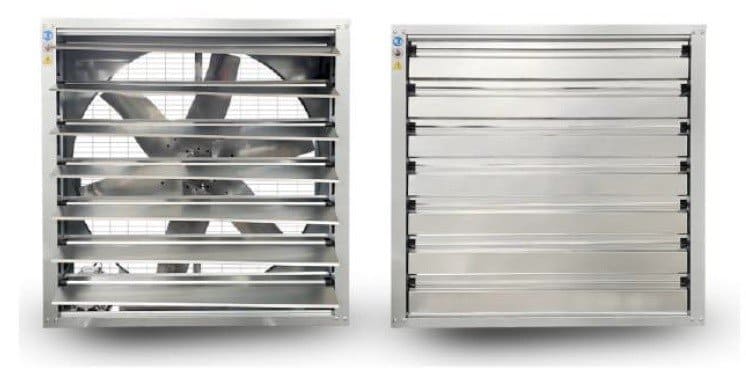
The housing is galvanised, so the zinc layer protects the steel both as a barrier and cathodically — including where the surface has been scratched. The intake side carries a metal mesh that keeps birds, rodents and debris away from the rotor, and the discharge side has a gravity shutter that closes by itself when the fan stops.
Why farmers and facilities managers choose a belt-driven fan
For noise level and motor life. Models up to 106 cm run at 60 dB(A) and the largest at 65 dB(A), which in a livestock building means less stress on animals under continuous operation. The belt also acts as a mechanical fuse: it slips under blockage, and it can be replaced on site for a fraction of the cost of a burnt-out motor.
How the fan is used in livestock buildings, halls and greenhouses
The fan mounts in a wall or ridge and runs either as extract to create negative pressure or as intake to supply fresh air. In livestock housing it drives out ammonia, carbon dioxide and moisture. In production halls it removes machine heat, process dust and fumes. In warehouses it keeps condensation and mould at bay, with the gravity shutter holding heat in through the winter months. In greenhouses it breaks up the pockets of humidity where fungal disease starts, ideally under thermostat control so it triggers on over-temperature.
Technical Specifications
| Product type | Wall-mounted industrial fan / ridge fan |
| Function | Intake or extract fan (reversible) |
| Drive | Belt-driven, speed adjustable via pulley |
| Noise level | 60–70 dB(A) |
| Intake guard | Metal mesh |
| Discharge guard | Gravity shutter, self-closing |
Model specifications
| Size (WxHxD) | Power | Airflow | Noise |
|---|---|---|---|
| 800 x 800 x 350 mm | 0.37 kW | 21,000 m³/h | 60 dB(A) |
| 900 x 900 x 350 mm | 0.37 kW | 28,000 m³/h | 60 dB(A) |
| 1060 x 1060 x 350 mm | 0.55 kW | 32,500 m³/h | 60 dB(A) |
| 1380 x 1380 x 400 mm | 1.1 kW | 44,500 m³/h | 65 dB(A) |
Used by: Livestock farmers, facilities technicians, ventilation installers, production managers and greenhouse growers.
Common in: Livestock and agriculture, manufacturing, warehousing and logistics, and horticulture.
Frequently Asked Questions (FAQ)
What does installing the BestFan wall fan require?
A 400V 3-phase supply fitted by a qualified electrician, and a wall able to carry the weight and absorb the vibration — the largest model measures 1380 x 1380 mm with a 1.1 kW motor and needs load-bearing structure, not stud partition. The fan cannot be run from a standard 230V socket. Maintenance is quarterly blade cleaning and a belt tension check every six months.
How do I size the BestFan wall fan for my building?
Multiply the volume of the space in m³ by the air changes per hour required. Livestock buildings are normally calculated at 4–6 changes and warehouses at 2–3. A 4,000 m³ hall at five changes therefore needs 20,000 m³/h, which the smallest model at 21,000 m³/h covers. The 21,000–44,500 m³/h range corresponds to roughly 4,000 to 9,000 m³ at five air changes.
What separates the BestFan belt-driven wall fan from a direct-drive industrial fan?
The transmission. On a direct-drive fan the rotor sits on the motor shaft, which fixes the speed and passes vibration straight into the wall. Belt drive lets the belt take the shocks and slip under blockage, which spares the motor, and speed is changed by swapping the pulley rather than replacing the fan. Noise sits at 60–65 dB(A) across the models up to 138 cm.
| Other | |
| Diameter Ø (mm) | 350 - 400 |