






Key Facts — Low Profile Car Ramp CR700
- Item number: CR700
- Type: Low profile ramps for lowered and low-clearance cars
- Rise: 65 mm
- Incline: approx. 5° over the 700 mm ramp length
- Load capacity: 5 tonnes per pair
- Quantity: 2 ramps per set
- Maximum tyre width: 180 mm
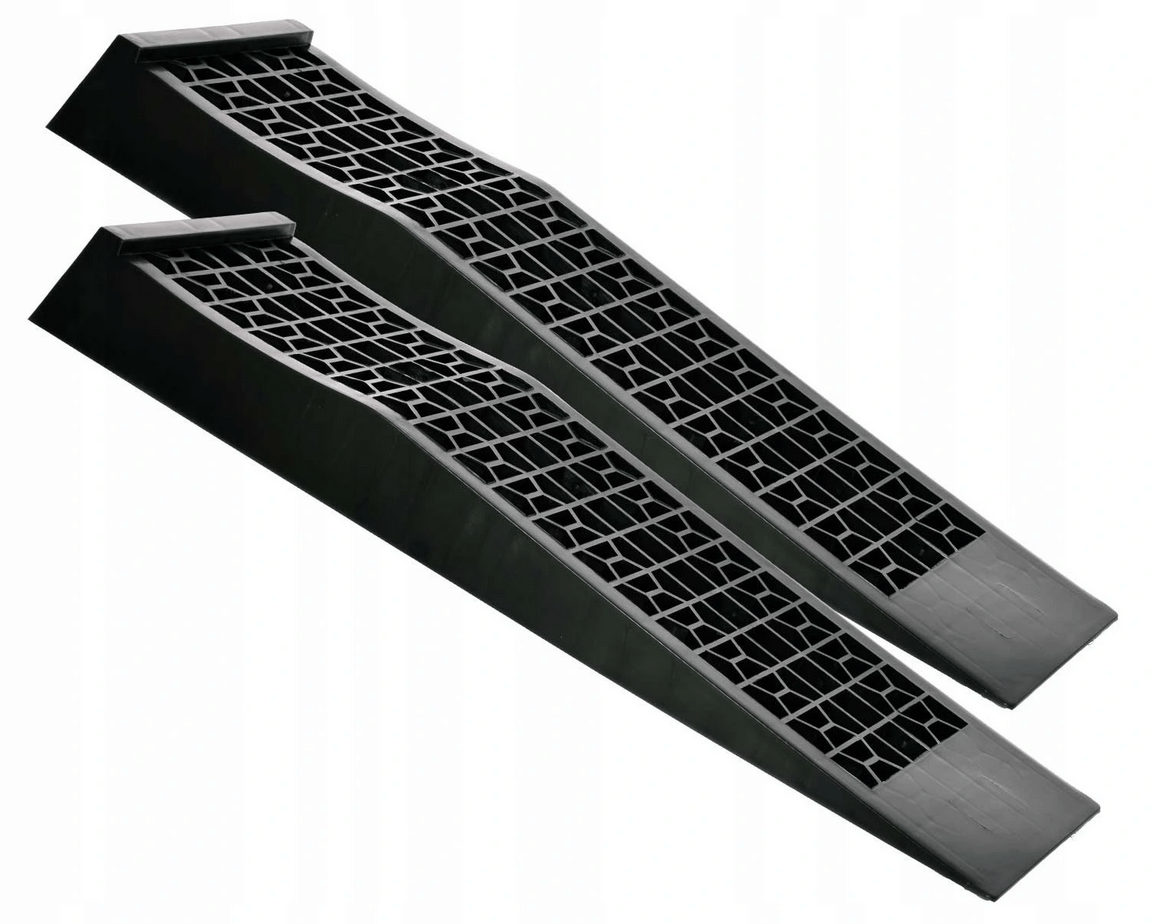
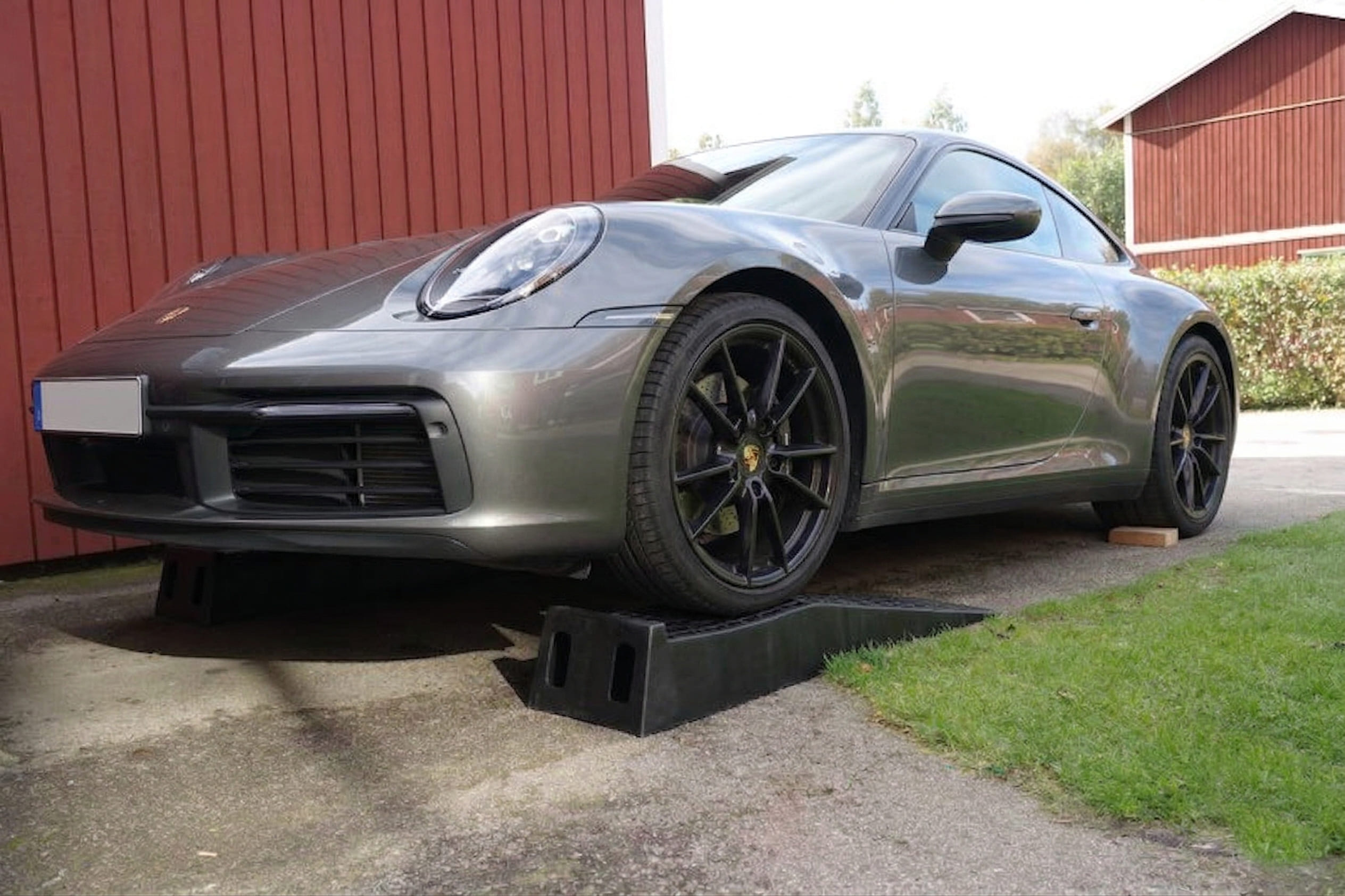
The CR700 low profile ramp raises the car by 65 mm at an approach angle of roughly 5 degrees across its 700 mm length. That angle is what decides whether a low car gets up at all: the front splitter never meets more than that gradient, unlike a standard workshop ramp that often starts at 12–15 degrees and grounds out before the tyre has even taken hold. Cars with only a few centimetres of clearance under the lip therefore climb on without contact.
The most common use is not as a ramp on its own but as an extender. Place the CR700 in front of an existing taller ramp, drive onto the low profile section first and roll on — it splits the steep approach into two stages and lets a lowered car reach a ramp it otherwise could not. Used alone, it provides the 65 mm needed to get a jack under a low sill without damaging bumpers or side skirts.
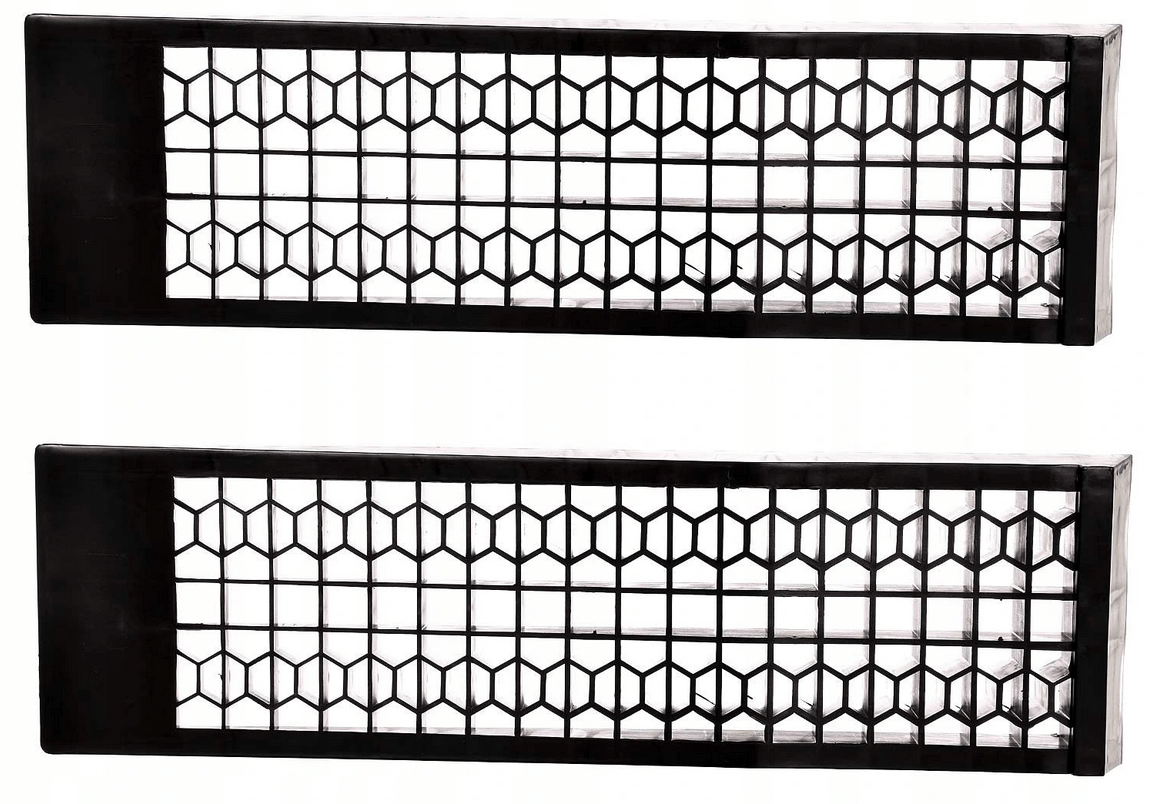
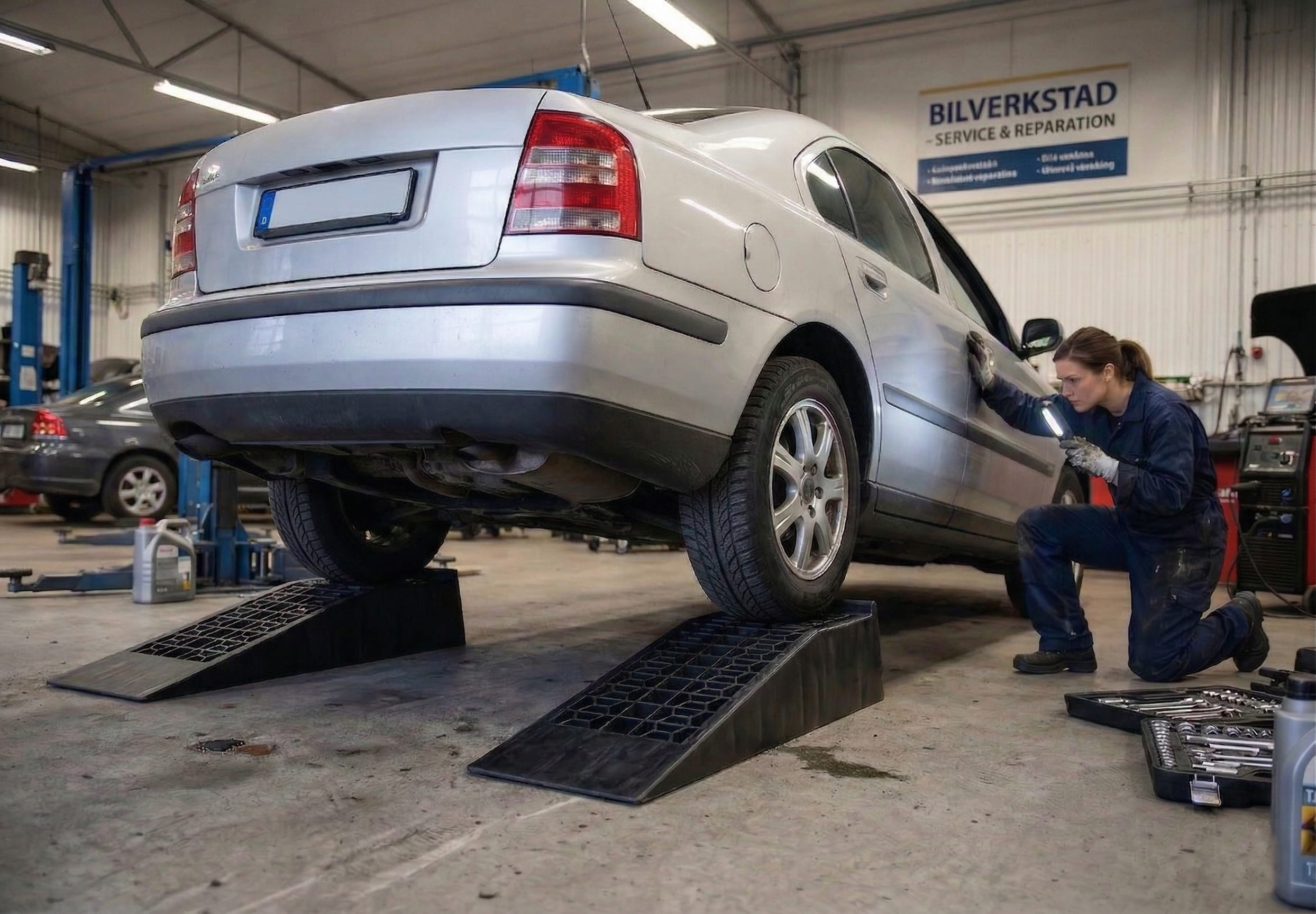
Each ramp measures 700 × 200 × 80 mm and takes tyres up to 180 mm wide. The surface is non-slip with raised edges that keep the tyre centred during the climb. The material is polypropylene: rust-free, resistant to damp and UV, and light enough to carry the pair in one hand — unlike steel ramps, which tend to stay wherever they were last used.
When does the CR700 low profile ramp make the most sense?
When ground clearance is too low for both a jack and a conventional ramp. With a 65 mm rise and 5 tonnes per pair it covers wheel changes, tyre cleaning, underbody inspection and access to jacking points on sports cars, coupés and lowered vehicles. It does not replace a full drive-on ramp for work beneath the car — it creates the clearance needed to continue with a jack or to reach a taller ramp.
How the ramp is used in the garage and at the roadside
Drive the front wheels on slowly and evenly until the tyre rests against the top of the ramp, apply the handbrake and chock the wheels still on the ground. Only then position the jack. When pairing with a taller ramp, the low profile ramp must sit flush against the larger ramp's approach with no gap for the tyre to catch in. Outdoors the polypropylene performs as it does indoors, which makes the pair worth keeping in the boot for punctures on a low car.
Technical Specifications
| Item number | CR700 |
| Material | Polypropylene |
| Dimensions per ramp (L × W × H) | 700 × 200 × 80 mm |
| Surface | Non-slip with raised edges |
| Weather resistance | Resistant to damp and UV, rust-free material |
| Use | Standalone lift or extender in front of a taller ramp |
Chosen by: Owners of lowered and low-slung cars, vehicle mechanics, detailers, tyre fitters and home mechanics.
Found in: Car workshops, vehicle detailing, motorsport, car rental and private garages.
Frequently Asked Questions (FAQ)
Does the CR700 low profile ramp work with a lowered car?
Yes, that is exactly what it is built for. The incline is roughly 5 degrees across the ramp's 700 mm, flatter than a standard drive-on ramp, which means the front lip clears on most lowered cars without scraping. Measure the clearance under the splitter before the first run: below around 60 mm the ramp may need pairing with a thin lead-in board. Maximum tyre width is 180 mm.
Can an oil change be done with the car on the CR700 low profile ramp?
No. A 65 mm rise is not enough to work beneath the car — the height is intended for access to jacking points, wheel changes and inspection from the side, not for lying underneath the vehicle. An oil change calls for a full drive-on ramp, or axle stands after lifting with a jack. Never go under a car supported only by these ramps.
Can the CR700 low profile ramp be combined with standard car ramps?
Yes, and this is one of its main uses. The ramp is placed tight in front of a taller drive-on ramp and acts as a ramp extender: the steep approach is broken into two stages so a low car can reach a ramp it would otherwise ground out on. Check that the edges meet with no gap, and that the combined load stays within the 5 tonne rating for the pair.