






















How to choose a blast cabinet – buying guide for workshops and garages
A blast cabinet is the fastest way to strip rust, paint and oxide from wheels, engine parts and forged steel – without the dust ending up in your lungs or all over the workshop. But "blast cabinet" covers everything from a 90-litre benchtop box to a 1,000-litre industrial booth, and the most common mistake is buying the wrong size for the wrong compressor. Here is what you need to know before you order.
1. The compressor decides – not the cabinet
Blasting is the most air-hungry thing you can do with compressed air. A blast cabinet with a 5–6 mm nozzle consumes 400–700 litres of air per minute (14–25 CFM) at 6–8 bar, continuously. A typical single-phase workshop compressor of 1.5–2 kW delivers 200–250 l/min of free air – and that is what actually comes out, not the displacement figure printed on the label, which is usually 30–40 % higher.
Rule of thumb:
- 200–250 l/min (single-phase hobby compressor): short sessions with a 4 mm nozzle. The compressor runs constantly and you wait for pressure between passes.
- 300–500 l/min (3–4 kW, three-phase, 200-litre receiver): works well for 220–350 litre cabinets with a 5 mm nozzle at workshop pace.
- 600 l/min and up (screw compressor): required for continuous operation, 6–7 mm nozzles and cabinets from 350 litres.
If your compressor is too small there are two routes: fit a smaller nozzle (lower air consumption, slower cutting) or invest in a bigger compressor. Running two small compressors in parallel works on paper, but is rarely a good solution – they run hot and the moisture in the air increases.
Dry air matters as much as volume. Moist air clumps the media and blocks the nozzle. A water/oil separator right at the cabinet is mandatory; a refrigerant dryer is advisable for daily use.
2. Size: start from the largest part you will blast
The volume in litres does not tell the whole story – what counts is the internal dimensions and how you get the part in.
| Size | Suitable for | Typical user |
|---|---|---|
| 90 litres (benchtop) | Carburettors, brake callipers, fittings, tools | Hobby garage |
| 220 litres (floor-standing) | Engine parts, smaller wheels, motorcycle parts | Home workshop, small garage business |
| 350 litres | Wheels up to 18–19", cylinder heads, frame parts | Automotive workshop, wheel refurbishment, forge |
| 450 litres and up | Larger wheels, body panels, longer profiles | Workshop with continuous operation |
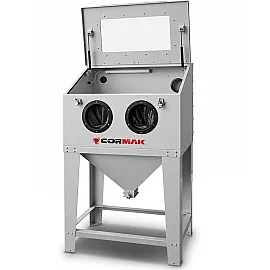
Two details that are often overlooked: top loading (the lid lifts on gas struts) makes it far easier to load heavy parts than a side door, and you need a sturdy floor grate if you are going to drop in a 15 kg wheel.
3. Dust extraction – what separates a usable cabinet from a frustrating one
The most common complaint about cheap blast cabinets is that you cannot see what you are doing. After a minute the air inside is white with dust. The solution is negative pressure: an extractor that pulls the dust out and keeps the window clear.
- Cabinets with built-in extraction solve the problem from the start and are the only sensible choice for workshop use. Expect to clean or replace the filter regularly.
- Cabinets without extraction can be hooked up to a wet-and-dry vacuum, but always fit a cyclone separator in between – otherwise the vacuum filter is clogged after ten minutes and the abrasive dust wrecks the motor.
Replace the window film as soon as it goes dull. The film is cheap; the glass is not.
4. Siphon or pressure blasting?
Practically all blast cabinets are siphon-fed (suction-fed): the compressed air through the gun creates a vacuum that draws media up from the bottom of the cabinet. Simple, reliable and cheap – but the cutting rate is moderate.
Pressure-fed systems have a pressurised pot that forces the media out and cut several times faster. They exist as industrial cabinets, but for a workshop that blasts a few hours a week, a siphon cabinet with the right compressor and extraction is almost always the better deal.
5. Which blasting media for which job?
This is where real damage can be done – to the workpiece and to your health. Ordinary silica sand must not be used in blast cabinets: crystalline silica dust causes silicosis and is strictly regulated across the EU. Choose instead:
- Glass beads – the most popular choice. Gives an even, satin finish on aluminium and stainless steel without removing material. Ideal for engine parts, motorcycle parts and wheels that will be painted.
- Aluminium oxide (corundum) – sharp and hard, cuts rust, paint and mill scale quickly. Leaves a rough profile that paint and powder coating bond to extremely well. Can be recycled many times.
- Soda (sodium bicarbonate) – extremely gentle, water-soluble. For carburettors, soft metals and surfaces where dimensions must not change. Cannot be reused.
- Crushed glass – cheap and sharp, somewhere between glass beads and corundum.
Grit size controls the result: coarse grit cuts fast but leaves a rough surface, fine grit gives a finer finish. Run at the lowest pressure that does the job – higher pressure just pulverises the media into dust without blasting any better.
6. Cheap cabinet from a DIY chain or marketplace and modify it – or buy right the first time?
This debate runs permanently in workshop forums. The budget cabinets sold by DIY chains and online marketplaces are, at heart, the same Chinese sheet-steel construction as the dearer brands. The difference lies in sheet thickness, seals, the gun and above all what is included.
What the home user usually has to do with a budget cabinet:
- Seal every panel joint with silicone during assembly (otherwise media leaks onto the floor).
- Replace the supplied gun, often the weakest part of the cabinet.
- Build their own extraction with a vacuum and cyclone.
- Fit better LED lighting.
For a garage that is often a reasonable route – a few euros in accessories and an evening's work. For a workshop where the cabinet will be used by several people, every week, the sums are different: the time spent modifying, downtime when the gun fails and an extraction that never got quite right cost more than the price difference. Then a cabinet with extraction, top loading and proper seals from day one is the cheaper option over three years.
Our recommendation: hobby use – buy cheap and modify, it is half the fun. Workshop – buy a cabinet with extraction in the right size straight away and spend your time blasting.
7. Wear parts to keep in stock
A blast cabinet stands idle when a small part is missing. Keep on hand: ceramic nozzles in a couple of sizes (a nozzle lasts 20–40 hours depending on media), window film, a spare pair of gloves and filters for the extractor. Tungsten carbide nozzles last many times longer than ceramic and pay for themselves in daily use.
Checklist before you order
- Your compressor's delivered air volume in l/min (FAD) – compare with the cabinet's requirement.
- Internal dimensions against the largest part you will blast.
- Extraction: included, or do you need to solve it yourself?
- Top loading if you will be lifting in heavy parts.
- Water/oil separator at the cabinet.
- The right media for the job – never silica sand.
- Nozzles and window film in reserve.
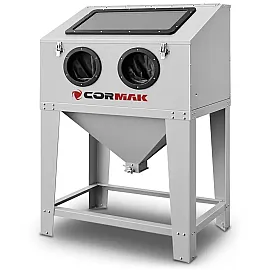
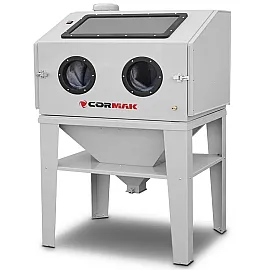
See our blast cabinets with dust extraction in 220, 350, 450 and 1000 litres together with blasting media, nozzles and window film. Business customers across the EU order against invoice with a valid VAT number; delivery is by pallet from our warehouse in Poland. Unsure about size or compressor? Get in touch and we will work it out with you.
Related Products



Leave a comment